


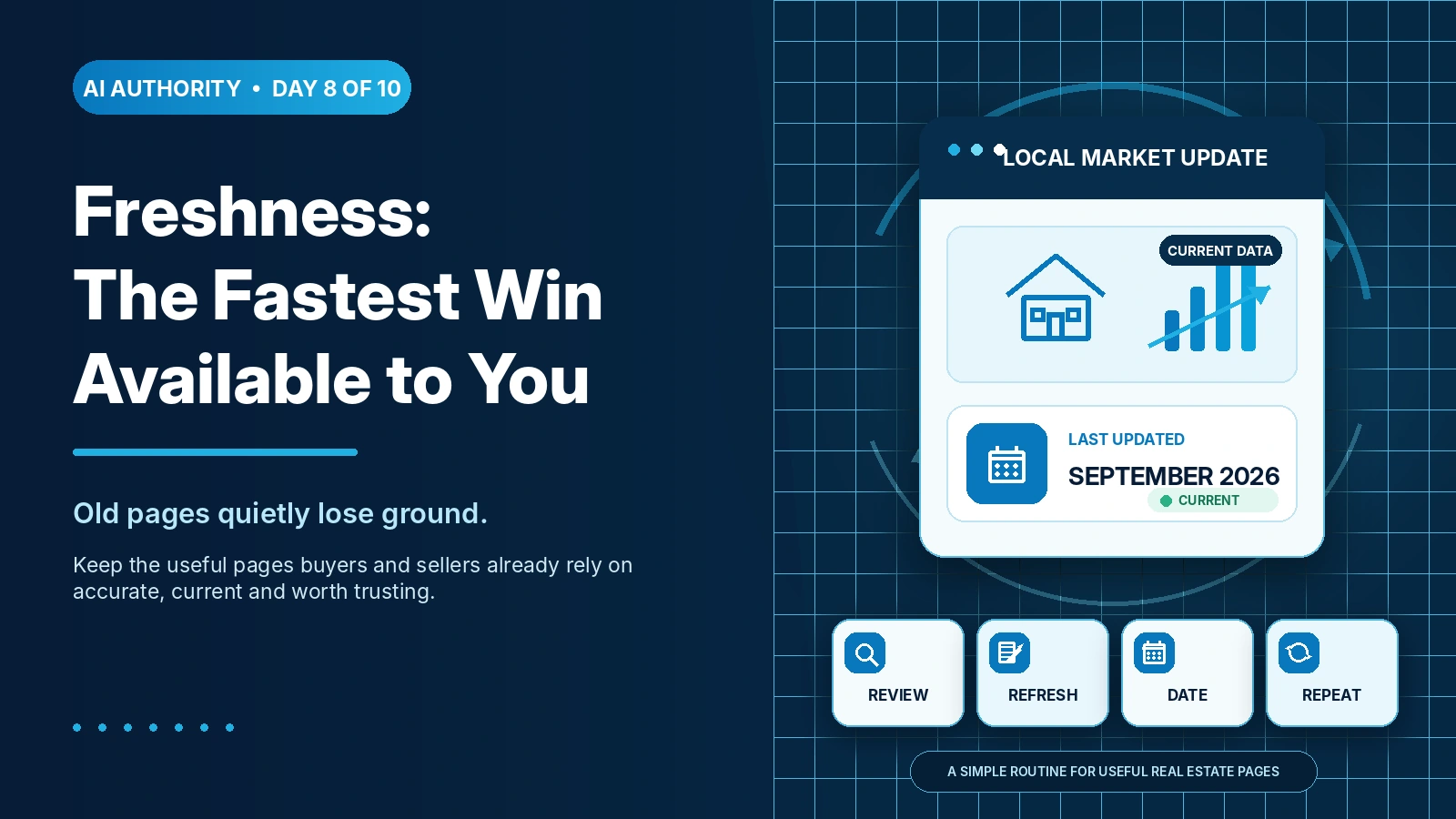
Day 7 covered a signal that takes time to build. Day 8 is much faster: keep the useful pages you already have accurate and current. For a real estate website, that can make an immediate difference to buyers and sellers.
Freshness matters most when the answer can change
Search systems use freshness signals most heavily for questions where current information is expected, including market conditions, pricing, regulations and comparisons. Helpful signals can include a visible publication or update date, accurate datePublished and dateModified markup, an honest sitemap lastmod value and a substantive change to the page itself. These signals should agree. Changing only the date is not the same as updating the information.
In Plain English
Not every page on your website needs constant updating. Some information remains useful for years. But the content that reflects your expertise, your market, your communities, and current local conditions deserves regular attention.
Think about two Realtor-written neighbourhood pages that answer the same question. One was reviewed last month and includes current local observations, market conditions, and community information. The other has not been touched in several years. When the question depends on what is happening now, the current page provides stronger evidence to work with.
The same is true of your own market updates, community insights, buyer and seller advice, local guides, and other content where you are the source.

A Workable Freshness Routine
The original Day 8 lesson recommends four simple habits.
Show your dates
Display a clear publication date and, when the page has been meaningfully revised, a “Last updated” date. Readers should not have to guess how current the information is.
Keep the technical dates honest
The dates in the page markup and sitemap should reflect a real update to the main content, not a copyright change or an automatic system refresh.
Set a review cycle
Review important buyer, seller and community pages at least quarterly when the information changes often. Review more stable pages annually. Market reports should follow the reporting schedule they describe.
Update substantively
Refresh the numbers, programs, examples, links and local details. Remove advice that is no longer true. Changing the date without changing the content helps no one.
Most businesses publish constantly and maintain very little. One useful page that is genuinely reviewed can be more valuable than several new pages that are forgotten after launch.
How do search systems read update dates?
This section is optional. The practical routine above is the main lesson.
- Freshness is query-dependent. A recent date matters more for a current market update than for an evergreen explanation of how a home inspection works.
- Visible and machine-readable dates should agree. A page may show “Last updated,” while its Article markup supplies
dateModified. Both should describe the same meaningful revision. - Sitemap dates should reflect significant changes. Google says
lastmodshould represent an update to the main content, structured data or important links—not a routine copyright-date change. - Freshness is not a guarantee. A current page still needs to be useful, accurate, accessible and relevant.
The Takeaway
Old content does not always look broken. It simply becomes less dependable as the facts around it change.
How Do You Measure Something With No Rank Tracker?
AI visibility, and how to actually see it.


Leave A Comment