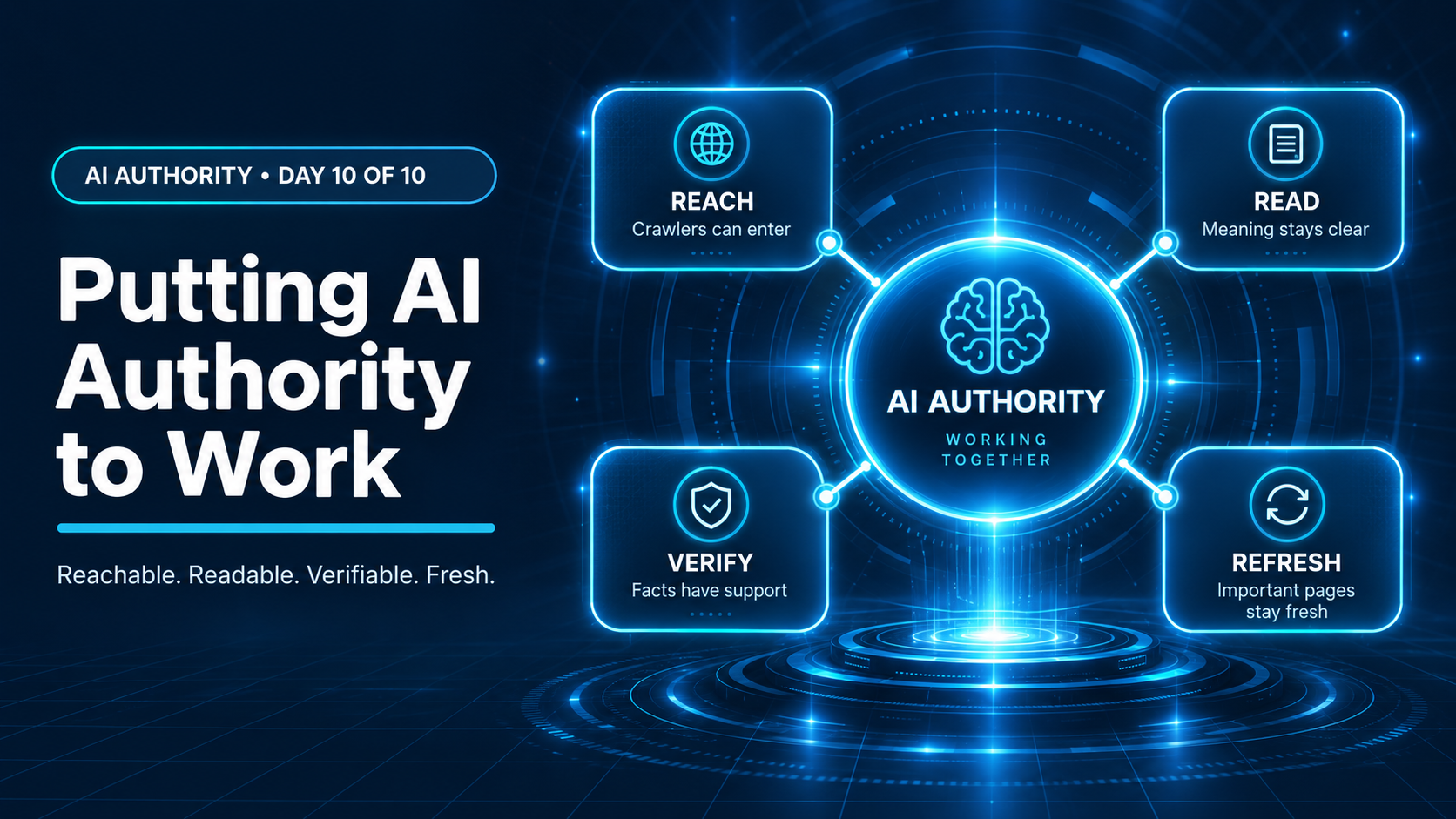
The first nine lessons separated GEO into manageable pieces. Day 10 puts them back together. AI Authority is not one tactic. It is what happens when the whole website system supports discovery and trust.
GEO readiness is maintained, not installed once
GEO readiness can drift over time. Crawl permissions may change when security tools are updated. Structured data may break during a template change. Business details, authors and dates can become stale. Competing sources can also improve. A durable approach therefore combines an initial review of access, readable content, structured data and authority signals with occasional checks after website changes and on a regular maintenance schedule.
In Plain English
AI assistants have become another starting point for buying decisions. Instead of returning a long page of links, they may provide a short answer with only a limited number of businesses and sources.
A real estate website has a better chance of being considered when AI systems can reach its public pages, understand the useful information, identify the business and people behind it, confirm important claims and see that time-sensitive content is still current.
The most common failures are often invisible from the front of the website. The design may look excellent while a crawler is blocked, an important answer is trapped inside an image, the schema no longer matches the page or a market guide has quietly gone stale.

Everything in Four Conditions
The ten-part series can be reduced to four questions, in this order.
Can AI systems reach the site?
Important public pages must be available to the search and retrieval tools you intend to allow. If the door is closed, nothing later in the process matters.
Can they read and identify the page?
The main meaning should remain clear as text, headings, lists and useful passages. Structured data can help identify the business, agent, service and article.
Can important claims be supported?
Consistent business information, named experts, original local insight and credible mentions elsewhere make the facts easier to verify.
Is the information still current?
Market pages, programs, prices, rules and recommendations need real review. Visible dates and technical dates should reflect meaningful updates.
This is the part worth being honest about: it does not stay fixed forever. Security settings change, templates are updated, facts age and competitors improve. A simple review cycle keeps the work from quietly drifting backwards.
What deserves an occasional recheck?
This section is optional. The four questions above are the complete high-level framework.
- After security or hosting changes: confirm that important search and retrieval crawlers can still access public pages.
- After a redesign or plugin change: confirm that visible content, headings, internal links and structured data still appear correctly.
- On a content schedule: review market data, programs, service details, biographies, contact information and important guides.
- On a measurement schedule: repeat the same visibility questions, check citations and referral visits, and watch for trends rather than anecdotes.
Google: AI features and your website
The Takeaway
Your real estate website does not need a collection of mysterious AI tricks. It needs the fundamentals to work together: access, understandable content, clear identity, credible support and current information.
Would you like to see how these pieces work together?
SuccessWebsite can show you how our platform and services bring AI-ready website structure, useful content, marketing and ongoing maintenance together. The demonstration is no-obligation and uses your business goals as the context rather than a generic example.
Schedule a Demonstration