Day 6 explained how schema can identify your real estate business. Day 7 takes the next step: a clear label tells a system who you are, but it does not automatically prove every claim you make.
Trust is built from consistent, supportable facts
Generative and search systems do not have to rely on one self-published claim in isolation. Consistent business details, clearly identified authors, original material and credible references from elsewhere on the web can reduce uncertainty about who a business is and whether a claim is well supported. There is no public, universal “AI trust score,” and none of these signals guarantees a mention. They simply make accurate facts easier to verify.
In Plain English
Your homepage can say that you are experienced, trusted or the leading local expert. Those statements may be sincere, but they are still claims published by your own business.
Think of it as reference checking. One person making a claim is a starting point. Several credible sources showing the same business details, experience and local activity make that information easier to believe and repeat.
For a real estate agent, that supporting evidence may appear on a brokerage profile, an association directory, a verified business listing, a local news story, a community organization’s website or an article that clearly identifies the person who wrote it.

What Builds Trust Over Time
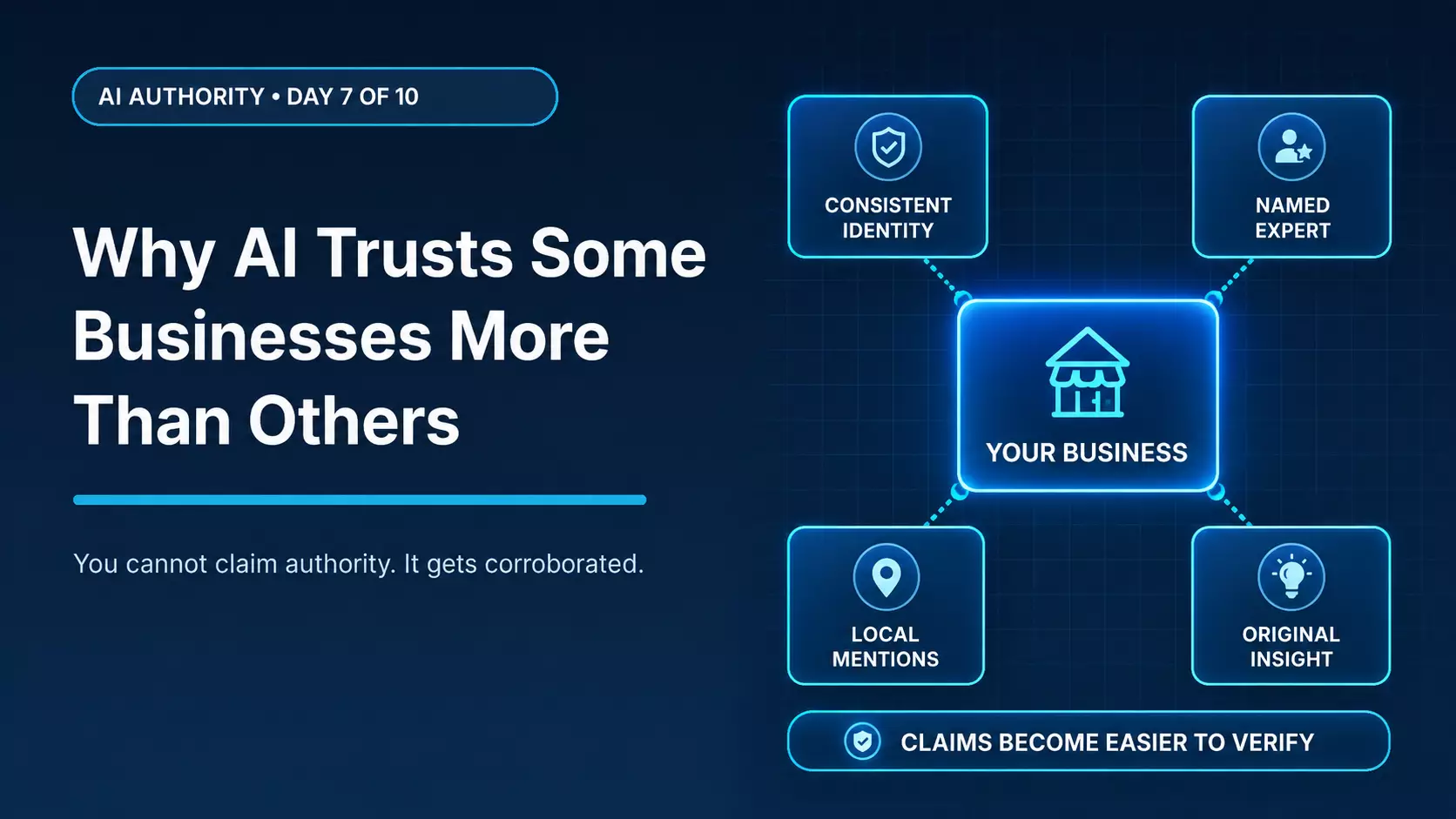
The original lesson comes down to four practical signals. None is a quick trick, but all are understandable.
Consistent identity everywhere
Use the same public business name, website, phone number and service area across your site and important profiles. Minor formatting differences are normal; contradictory facts create confusion.
Named, qualified authors
Put a real name on market updates, buyer guides and seller advice. Link the byline to a useful biography that explains the person’s role, market experience and relevant credentials.
Being mentioned elsewhere
Legitimate mentions from brokerages, associations, local media, podcasts, event pages, partner organizations and community groups provide context that your own homepage cannot provide by itself.
Original local material
Publish your own market observations, neighbourhood knowledge, data, photos, case examples and explanations. Original insight gives other people something specific to reference.
This is the slowest part of GEO to build and one of the hardest for a competitor to copy. That is exactly why it is worth starting early.
What counts as useful outside support?
This section is optional. The four ideas above are all most real estate agents need.
- Quality matters more than quantity. Dozens of low-value directory entries are not the same as a useful mention from a source that has a legitimate reason to identify your business.
- A link is helpful, but the mention still needs context. The source should make it clear which person or business it means and why it is being mentioned.
- Author information should be specific. A real biography, role, market experience and first-hand knowledge are more useful than a generic “admin” byline.
- Keep claims precise. “Serving Brantford since 2004” is easier to verify than “the area’s number-one expert.”
The Takeaway
Authority is not a badge you add to a page. It is the result of clear identity, real people, useful local knowledge and accurate facts that are supported beyond your own website.
Freshness: The Fastest Win Available to You
Old pages quietly lose ground.